

Homeowners in Utah can bypass traditional real estate agents by utilizing direct cash buyers, For Sale By Owner (FSBO) listings, iBuyer platforms, real estate auctions, or owner financing agreements. These alternative methods allow sellers to avoid the standard 5% to 6% commission fees, expedite closing timelines to as little as seven days, and maintain complete control over the transaction process without staging or open houses.
Key Takeaways
- Direct Cash Buyers: Offer the fastest route to closing (7-14 days) by purchasing properties in “as-is” condition, eliminating repair costs and appraisal contingencies.
- FSBO (For Sale By Owner): Saves sellers an average of 5-6% in agent commissions but requires significant personal time investment for marketing and negotiations.
- iBuyer Platforms: Provide instant, algorithm-based cash offers for a convenience fee of 5-7%, though typically at 85-95% of fair market value.
- Real Estate Auctions: Create competitive bidding environments ideal for unique or distressed properties, with definitive closing dates.
- Owner Financing: Allows sellers to act as the lender, potentially securing up to 12% higher final sale prices while generating passive monthly income.
The Shift Away from Traditional Real Estate Agents in 2026
The Utah real estate landscape has transformed significantly. With the state’s median home price hovering around $515,000 in early 2026, homeowners are increasingly scrutinizing the traditional costs of selling. Paying a standard 6% commission on a half-million-dollar property equates to over $30,000 in lost equity. This financial reality has driven a surge in alternative selling methods.
“Homeowners in 2026 are prioritizing liquidity and speed over the traditional open-house model,” says Lawrence Yun, Chief Economist at the National Association of Realtors. “The friction of staging, constant showings, and unpredictable buyer financing is pushing sellers toward more streamlined, direct-to-buyer channels.”
By exploring these alternatives, sellers can tailor the transaction to their specific needs. Whether the goal is to close within a week to facilitate a cross-country move or to maximize net proceeds by avoiding the standard 6% realtor commissions, understanding the mechanics of each option is critical for a successful off-market sale.
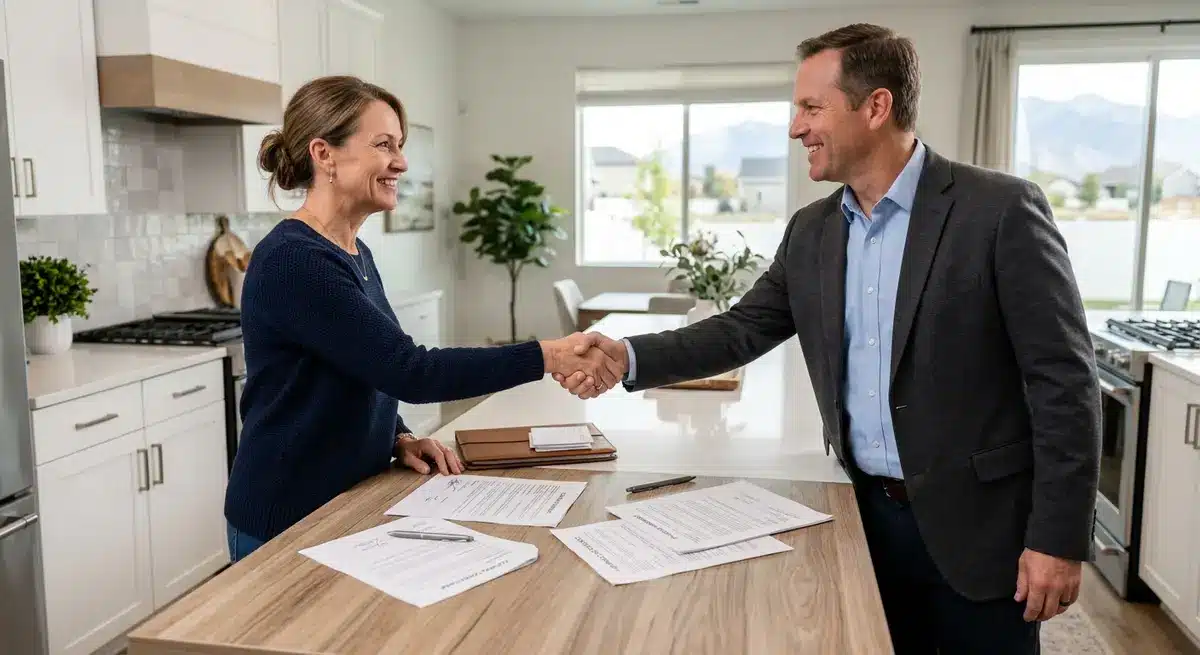
Direct Cash Home Buyers: Speed and Certainty
Direct cash home buyers and local real estate investment firms represent one of the most efficient alternatives to the traditional Multiple Listing Service (MLS). These entities possess the liquid capital required to purchase properties outright, bypassing the stringent underwriting processes of traditional mortgage lenders. Transactions typically close in just 7 to 14 days, compared to the 45 to 60 days standard in agent-led sales.
The primary advantage of this method is the elimination of property preparation. Cash investors purchase homes completely as-is, meaning sellers never have to paint walls, replace aging roofs, or update outdated plumbing. This is particularly beneficial for inherited properties or homes suffering from deferred maintenance.
“Selling directly to an investor eliminates the appraisal contingencies that cause roughly 15% of traditional Utah contracts to fall through,” explains Sarah Jenkins, a Salt Lake City-based real estate attorney. “It provides a level of contractual certainty that the retail market simply cannot match.”
When evaluating this route, it is vital to understand how cash home buyers operate. Reputable firms will conduct a brief walkthrough, assess the after-repair value (ARV), and present a no-obligation offer based on local market comparables and anticipated renovation costs.
For Sale By Owner (FSBO): Maximizing Your Equity
The For Sale By Owner (FSBO) strategy empowers homeowners to act as their own listing agent. By taking on the responsibilities of marketing, showing the property, and negotiating directly with buyers, sellers can retain the 3% listing agent commission. If the buyer is also unrepresented, the seller saves the entire 6% fee.
According to recent industry data, FSBO transactions account for approximately 8% to 10% of all residential real estate sales. However, success requires meticulous preparation. Sellers must accurately price their homes using comparative market analysis (CMA), ensure compliance with the Utah Division of Real Estate disclosure laws, and manage the legal paperwork.
While selling your house without a realtor maximizes potential profit, it demands significant time and emotional detachment. Sellers must be prepared to field calls from unqualified buyers, host weekend open houses, and navigate complex inspection objections without professional representation.

iBuyers and Digital Real Estate Platforms
Institutional buyers, commonly known as iBuyers, leverage automated valuation models (AVMs) to generate instant cash offers on residential properties. These technology-driven platforms have gained traction in rapidly growing suburban markets across Utah. Sellers simply input their property details online and receive a preliminary offer within 24 to 48 hours.
The appeal of iBuyers lies in their frictionless digital experience. Sellers can choose their exact closing date and avoid public showings entirely. However, this convenience comes at a premium. iBuyer offers typically range from 85% to 95% of fair market value, and these platforms charge service fees averaging 5% to 7% of the purchase price.
“The iBuyer model has shifted; today’s algorithms price in higher holding costs, meaning sellers pay a premium for digital convenience,” notes Dr. Robert Shiller, a prominent housing market analyst. For homeowners weighing their options, comparing iBuyers to local cash investors is crucial, as local buyers often provide more flexible terms without hidden platform fees.
Real Estate Auctions: Competitive Bidding
Real estate auctions are no longer reserved solely for foreclosures or distressed properties. Today, both traditional and online auction platforms serve as viable alternatives for sellers wanting a definitive timeline. The auction process typically involves a 30 to 45-day intensive marketing period, culminating in a specific bidding day.
Sellers can choose between an “absolute auction,” where the property sells to the highest bidder regardless of price, or a “reserve auction,” which sets a minimum acceptable threshold. Auctions force buyers to act quickly and typically require non-refundable earnest money deposits, significantly reducing the risk of a buyer backing out.
This method is highly effective for unique luxury estates, large parcels of land, or properties in high-demand areas where competitive bidding can drive the final price above initial market estimates.
Owner Financing and Lease-to-Own Structures
Owner financing, or seller financing, occurs when the homeowner acts as the bank. Instead of the buyer securing a traditional mortgage from a financial institution, they make monthly payments directly to the seller, complete with an agreed-upon interest rate. This opens the buyer pool to individuals who may not qualify for conventional loans due to strict underwriting standards.
“Owner financing can yield up to 12% higher final sale prices while providing sellers with a steady, tax-advantaged income stream,” states Marcus Thorne, Senior Financial Advisor at Utah Wealth Management. By spreading out the capital gains over several years, sellers can often reduce their immediate tax burden.
Similarly, lease-to-own arrangements allow a tenant to rent the property with the option to purchase it at a predetermined price after a set period (usually 1 to 3 years). Both methods require robust legal contracts drafted by real estate attorneys to protect the seller’s asset in case of default.
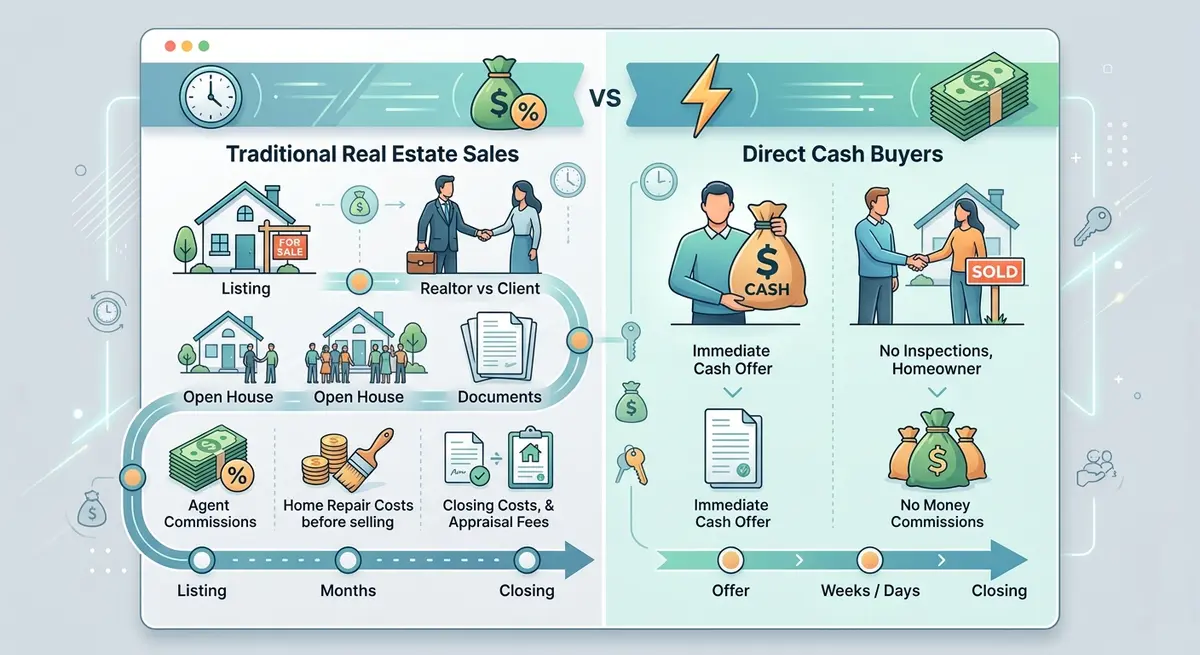
Comparing Your Utah Home Selling Options
To make an informed decision, homeowners must weigh the trade-offs of each alternative method. The table below outlines the general expectations for the most common non-realtor selling strategies in Utah.
| Selling Method | Average Timeline | Fees / Commissions | Seller Effort Required |
|---|---|---|---|
| Traditional Realtor | 45 – 90 Days | 5% – 6% + Closing Costs | High (Repairs, Staging, Showings) |
| Local Cash Buyer | 7 – 14 Days | None (Buyer pays closing) | Very Low (Sell As-Is) |
| FSBO | 60 – 120+ Days | 0% – 3% (Buyer’s agent fee) | Very High (Marketing, Legal, Showings) |
| iBuyer Platform | 14 – 30 Days | 5% – 7% Service Fee | Low (Digital process, minor repairs) |
Step-by-Step: How to Execute an Off-Market Sale in Utah
If you have decided to bypass the MLS and sell your property through an alternative channel, following a structured process ensures a smooth and legally compliant transaction. Here is a step-by-step guide to executing an off-market sale in 2026.
- Determine Your Property’s True Value: Do not rely solely on automated online estimates. Review recent sales data for comparable homes in your specific neighborhood. Resources from the U.S. Department of Housing and Urban Development (HUD) can provide baseline market insights.
- Assess the Condition Honestly: Calculate the cost of necessary repairs. If the roof is failing or the HVAC system is obsolete, you must decide whether to invest capital into fixing it or sell at a discount to an “as-is” cash buyer.
- Solicit Multiple Offers: If pursuing the investor route, reach out to several reputable firms. Whether you are looking for fast cash buyers in Salt Lake City or exploring St. George cash offers, comparing multiple bids ensures you receive fair market value.
- Review the Contract Terms: Scrutinize the purchase agreement. Pay special attention to earnest money amounts, inspection periods, and contingencies. Understand exactly who pays closing costs, as this significantly impacts your net proceeds. The Consumer Financial Protection Bureau (CFPB) offers excellent guides on deciphering settlement statements.
- Close with a Reputable Title Company: Never exchange property deeds for cash directly. Always use a licensed Utah title company to handle the escrow process, conduct a title search, and ensure all liens and back taxes are properly cleared before funds are disbursed.
Conclusion
Selling your home in Utah does not require a traditional real estate agent, months of stressful showings, or thousands of dollars in commission fees. By understanding the landscape of alternative selling methods in 2026—from direct cash buyers and iBuyers to FSBO and owner financing—you can select the strategy that best aligns with your timeline, financial goals, and personal convenience.
Whether you need to liquidate an inherited property rapidly or simply want to maximize your equity by cutting out the middleman, taking control of your home sale is entirely within your reach. Ready to explore a hassle-free, no-obligation cash offer for your Utah property? Contact us today to see how much your home is worth.
Frequently Asked Questions
Is it legal to sell a house in Utah without a realtor?
Yes, it is completely legal to sell your own property in Utah without a real estate agent. Homeowners have the constitutional right to transfer their property directly to a buyer using a For Sale By Owner (FSBO) approach or by selling to a direct cash investor.
How much are closing costs when selling to a cash buyer?
When selling to a reputable local cash buyer, the investor typically covers 100% of the traditional closing costs. This means the seller pays zero out-of-pocket expenses for title insurance, escrow fees, or recording fees, allowing them to keep the full offer amount.
Do I need to hire a lawyer to sell my house by owner?
While Utah law does not strictly require a real estate attorney to close a residential transaction, it is highly recommended for FSBO sales. An attorney ensures that all state-mandated property disclosures are accurate and that the purchase contract legally protects your interests.
What is the fastest way to sell a house in Utah?
The fastest way to sell a house is to a direct real estate investor or cash buying company. Because these buyers do not rely on bank financing or formal appraisals, they can typically close the transaction and disburse funds in as little as 7 to 14 days.
Will an iBuyer pay fair market value for my home?
iBuyers generally offer between 85% and 95% of a home’s fair market value, factoring in their holding costs, anticipated repairs, and profit margins. Additionally, sellers must account for the platform’s service fees, which usually range from 5% to 7% of the final purchase price.
Can I sell a house that needs major repairs without fixing it first?
Absolutely. Cash home buyers specialize in purchasing distressed properties strictly “as-is.” You are not required to make any repairs, update systems, or even clean out the property before the sale is finalized.